
Estate Planning Fundamentals for Queens Residents
Estate Planning Lawyer in Queens, NY: Your Guide to Wills and Trusts
Queens residents face unique challenges when planning for their family's future. From navigating New York's complex estate laws to understanding the differences between wills and trusts, making informed decisions about your legacy requires guidance from an experienced estate planning lawyer. Simon & Gilman, LLP has been serving Queens families since 1978, helping residents protect their assets and secure their loved ones' futures through comprehensive estate planning strategies.
What Is a Will?
Definition and Basic Features
A will is a legal document that outlines how you want your assets distributed after your death. In New York, a valid will must be in writing, signed by the testator (the person making the will), and witnessed by at least two individuals who are not beneficiaries. This fundamental estate planning tool allows you to name an executor, designate guardians for minor children, and specify how your property should be divided among your beneficiaries.
Advantages of a Will
Creating a will provides several important benefits for Queens residents. First, it ensures your assets go to the people you choose rather than following New York's intestacy laws. A will also allows you to name guardians for your minor children and designate an executor you trust to handle your estate. Additionally, wills are generally less expensive to create than trusts and can be updated easily as your circumstances change.
Limitations & New York-Specific Considerations
While wills serve important purposes, they have limitations in New York. All wills must go through probate in the Queens County Surrogate's Court, which can be time-consuming and expensive. The probate process also makes your will a public record, eliminating privacy for your family. Furthermore, wills don't provide protection if you become incapacitated during your lifetime, and they may not offer optimal tax benefits for larger estates subject to New York's estate tax.
What Is a Trust?
Definition and Basic Features
A trust is a legal arrangement where you transfer ownership of assets to a trustee who manages them for the benefit of designated beneficiaries. Unlike wills, trusts can take effect during your lifetime (living trusts) or after your death (testamentary trusts). Trusts offer greater flexibility in how and when assets are distributed, making them valuable tools for Queens families with complex financial situations.
Advantages of a Trust (Especially in New York)
Trusts provide significant advantages for New York residents. Most importantly, properly funded trusts avoid probate entirely, saving time and court costs while maintaining privacy for your family. Trusts also provide ongoing asset management if you become incapacitated, unlike wills which only take effect after death. For Queens families with substantial assets, trusts can offer tax planning opportunities and protect beneficiaries from creditors or poor financial decisions.
Limitations & New York-Specific Considerations
Despite their benefits, trusts require more upfront cost and complexity to establish properly. They also require ongoing management and may need regular updates as laws change. In New York, trust funding is crucial – simply creating a trust document isn't enough; you must actually transfer ownership of assets to the trust for it to be effective.
Specifics of New York State Law and Why They Matter
Probate & Surrogate's Court
In Queens, probate proceedings take place in the Queens County Surrogate's Court located in Jamaica. The probate process typically takes 7-12 months for straightforward cases, though complex estates may take years. Understanding these local court procedures is essential for effective estate planning, which is why working with a Queens probate lawyer familiar with local practices can streamline the process significantly.
New York Estate Tax & Other Deadlines
New York imposes its own estate tax on estates exceeding $6.58 million (2024 threshold). This is in addition to potential federal estate taxes, making tax planning crucial for affluent Queens families. Estate tax returns must be filed within nine months of death, with possible extensions available. Missing these deadlines can result in substantial penalties and interest charges.
Trust Funding in New York
Creating a trust document is only the first step – New York law requires proper funding for trusts to be effective. This means transferring ownership of real estate, bank accounts, investments, and other assets into the trust's name. Many families make the mistake of creating trusts but failing to fund them properly, which defeats the purpose of avoiding probate.
Suitable Tools for Complex Situations
New York law recognizes various sophisticated estate planning tools for complex situations. These include charitable remainder trusts, qualified personal residence trusts, and grantor retained annuity trusts. Queens families with business interests, multiple properties, or significant wealth may benefit from these advanced strategies.
Why Choose a Will, a Trust, or Both?
Situations where a simple will may suffice
A straightforward will might be appropriate for younger Queens residents with modest assets, no minor children, and uncomplicated family situations. If your primary assets include a home, retirement accounts with designated beneficiaries, and personal property, a will combined with proper beneficiary designations may provide adequate protection.
Situations where a trust (or trust + will) may be appropriate
Trusts become valuable when you have significant assets, own real estate in multiple states, have minor children or beneficiaries with special needs, or want to maintain privacy for your family. Many Queens residents benefit from a combination approach – a revocable living trust for major assets plus a "pour-over" will to handle any assets not transferred to the trust.
Three Common Client Scenarios (Why You Should Hire a Lawyer)
Scenario A: You own a home in Queens, a vacation property in another state, and have children from a prior marriage
This situation requires careful planning to avoid probate in multiple states and ensure fair treatment of all children. A properly structured trust can hold both properties, avoiding ancillary probate proceedings. Additionally, specific provisions can address potential conflicts between current spouse and children from previous relationships.
Scenario B: You're getting older, worried about incapacity, and your estate includes a business interest, rental property, and retirement accounts
Incapacity planning becomes crucial as you age. A revocable living trust can provide seamless management of your business and rental property if you become unable to handle these responsibilities. Proper coordination with retirement account beneficiaries ensures optimal tax treatment and distribution strategies.
Scenario C: You have a significant estate, blended family, or special-needs child, and want to protect assets while preserving control
Complex family dynamics require sophisticated planning strategies. Special needs trusts can protect disabled children's government benefits while providing supplemental support. For blended families, trusts can ensure your spouse is cared for during their lifetime while ultimately preserving assets for your children.
Frequently Asked Questions About Estate Planning in Queens
How much does estate planning cost in Queens?
Estate planning costs vary based on complexity, but simple wills typically range from $500-$1,500, while comprehensive trust-based plans may cost $2,500-$5,000. The investment in proper planning often saves families thousands in probate costs and taxes.
Do I need to update my estate plan after moving to Queens?
Yes, estate plans should be reviewed when relocating to ensure compliance with New York laws. Some states have different requirements for wills, trusts, and powers of attorney that may affect your existing documents.
What happens if I die without a will in Queens?
New York's intestacy laws will determine asset distribution, which may not match your wishes. Your surviving spouse and children will inherit according to statutory formulas, and the court will appoint an administrator to handle your estate.
Can I avoid probate in New York?
Yes, through properly funded revocable living trusts, joint ownership with rights of survivorship, and designated beneficiaries on retirement accounts and life insurance policies. However, these strategies require careful implementation to be effective.
How long does probate take in Queens County?
Straightforward probate proceedings typically take 7-12 months, though complex estates with disputes or tax issues may take several years. Working with an experienced probate lawyer can help expedite the process.
Should I choose a trust or will for my Queens estate?
The choice depends on your specific circumstances, including asset types, family situation, and privacy concerns. Many families benefit from a combination approach using both trusts and wills for comprehensive protection.
Contact Simon & Gilman, LLP for Your Estate Planning Needs
Don't leave your family's future to chance. Whether you need a simple will or comprehensive trust-based estate plan, Simon & Gilman, LLP provides the experienced guidance Queens families have trusted for over four decades. Our attorneys understand New York's unique estate planning requirements and will work with you to create a customized plan that protects your assets and honors your wishes.
Contact us for a free consultation today at 332-264-7559 to discuss your estate planning needs with our knowledgeable team. Your family's peace of mind is our priority, and we're here to help you navigate every aspect of the estate planning process in Queens, New York.
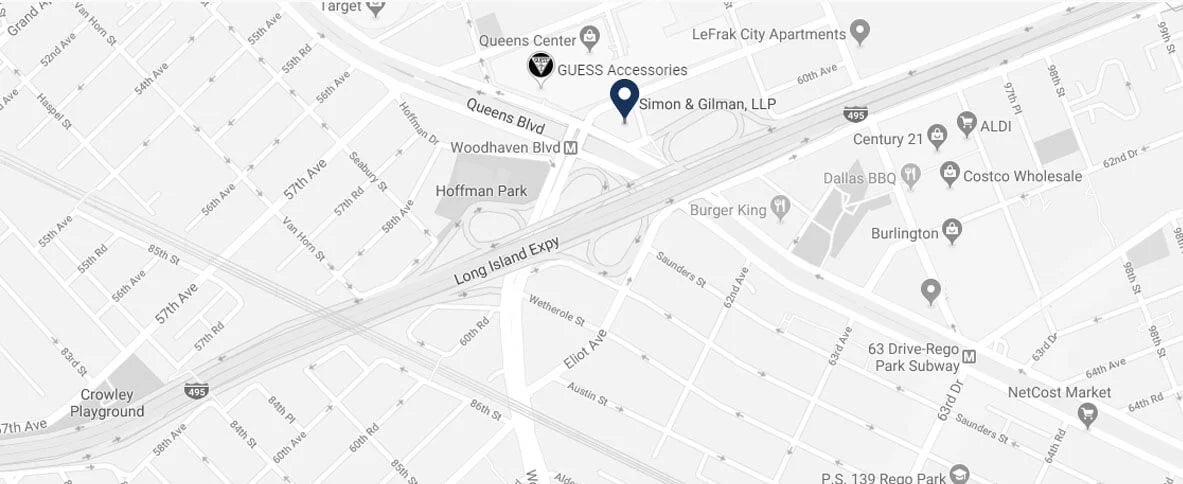
Simon & Gilman, LLP
Contact The Office
91-31 Queens Boulevard, Suite 411
Queens, NY, 11373